What is affordable housing, and how is it different from social housing?
Social housing is for people in the greatest need, with rents set as a share of the resident’s income. Affordable housing (which Assemble markets as "reduced rent" housing) is for low-to-moderate income households - including essential workers such as nurses, teachers and aged care workers - who earn too much to qualify for social housing but are priced out of the private market. Assemble builds both, in the same communities, because a city needs both.
How many homes has Assemble built?
Assemble’s national pipeline is more than 8,000 homes, including over 4,000 social and affordable homes. More than 1,100 homes are complete, with thousands more under construction. Every Assemble home is a new home - we build new supply rather than buying existing housing.
How are affordable rents set?
Affordable rents are set at a genuine discount to market rent. The market benchmark is determined by independent valuers, who assess properties of comparable age, quality and amenity in the same area - so the discount reflects what a household would actually pay for an equivalent new home nearby. Comparisons against a whole suburb’s median rent, which includes much older stock of very different quality, understate the real saving on a new apartment.
Who is eligible for affordable housing?
Eligibility is set by government, not by Assemble. Income thresholds are defined under state planning frameworks and, for federally supported projects, by Housing Australia. Applications are assessed independently against those published thresholds, based on documented current income, and applied consistently to every applicant.
Why do some applicants miss out?
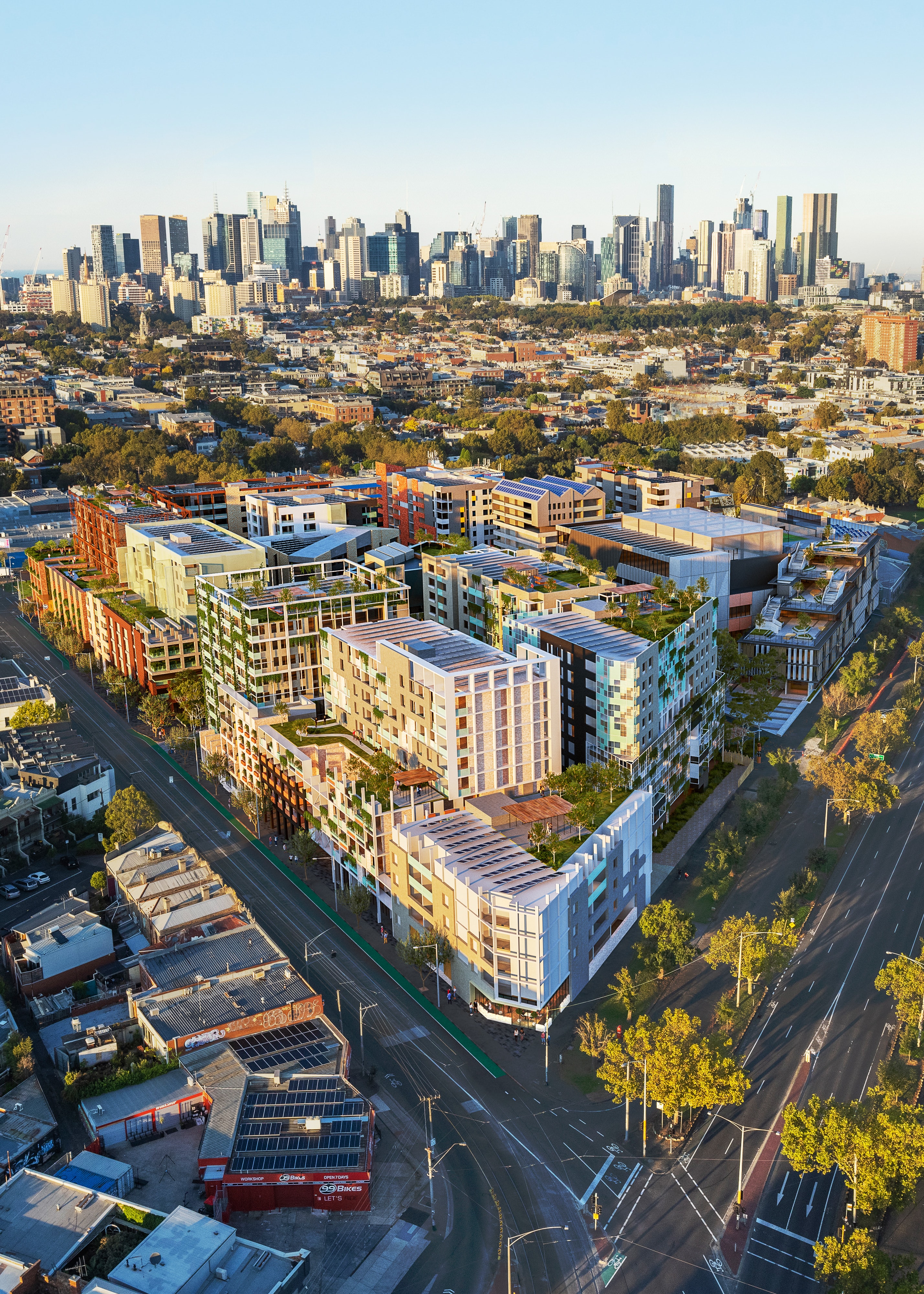
Demand far exceeds supply. At Swift Walk in Kensington, we received 364 applications for 163 affordable homes. Applicants may be unsuccessful for a range of reasons - household income above the threshold, standard checks, the apartment type they want not being available, or withdrawing for their own reasons. The eligibility framework also includes an income floor, which exists so that no household is placed in a home where the rent would put them under financial stress. People missing out is not evidence the process is unfair - it is evidence there are not enough homes, which is why more need to be built at every price point.
Are affordable homes sitting empty?
At Swift Walk, more than 90 per cent of affordable homes were leased within eight months of opening - fast lease-up for a large new development by any industry measure. The homes still available are mostly larger apartments, where families naturally weigh up an apartment close to the city against a house further out. The social homes are fully allocated.
Does Assemble receive government money for empty homes?
No. Under the Housing Australia Future Fund, availability payments are only made for homes that are tenanted. If a home is empty, Assemble receives no subsidy for it. Public support follows housed residents, not empty apartments.
Where does the funding come from, and how is it protected?
Assemble’s projects combine institutional investment - including from superannuation funds investing the retirement savings of millions of working Australians - with support under government programs for the social and affordable homes. Government funding is ring-fenced: under the program rules it supports only the social and affordable homes, and cannot subsidise the market housing, which stands on its own commercially. Assemble delivered ten projects worth $2.38 billion before any government housing funding existed.
What happens to the homes over the long term?
For HAFF (Housing Australia Future Fund) funded homes, Assemble and Housing Choices Australia have committed to maintaining all social homes in perpetuity at a minimum. This means that these homes are retained as social homes indefinitely, regardless of what happens to the funding program.
For current Assemble projects which are not supported by HAFF funding and which include affordable homes (not social homes) a range of affordability outcomes are delivered. This includes maintaining 20% of homes as affordable homes for a minimum of 10 years.
Who manages the homes and looks after residents?
Swift Walk homes and residents are managed by not-for-profit community housing providers Housing Choices Australia and Aboriginal Housing Victoria in partnership with Essence Communities.
Housing Choices Australia, is one of the country’s largest registered not-for-profit community housing providers, with nearly 30 years’ experience and around 8,000 homes under management nationally. Housing Choices Australia selects residents for the social homes, manages tenancies and connects residents with support services.